Service
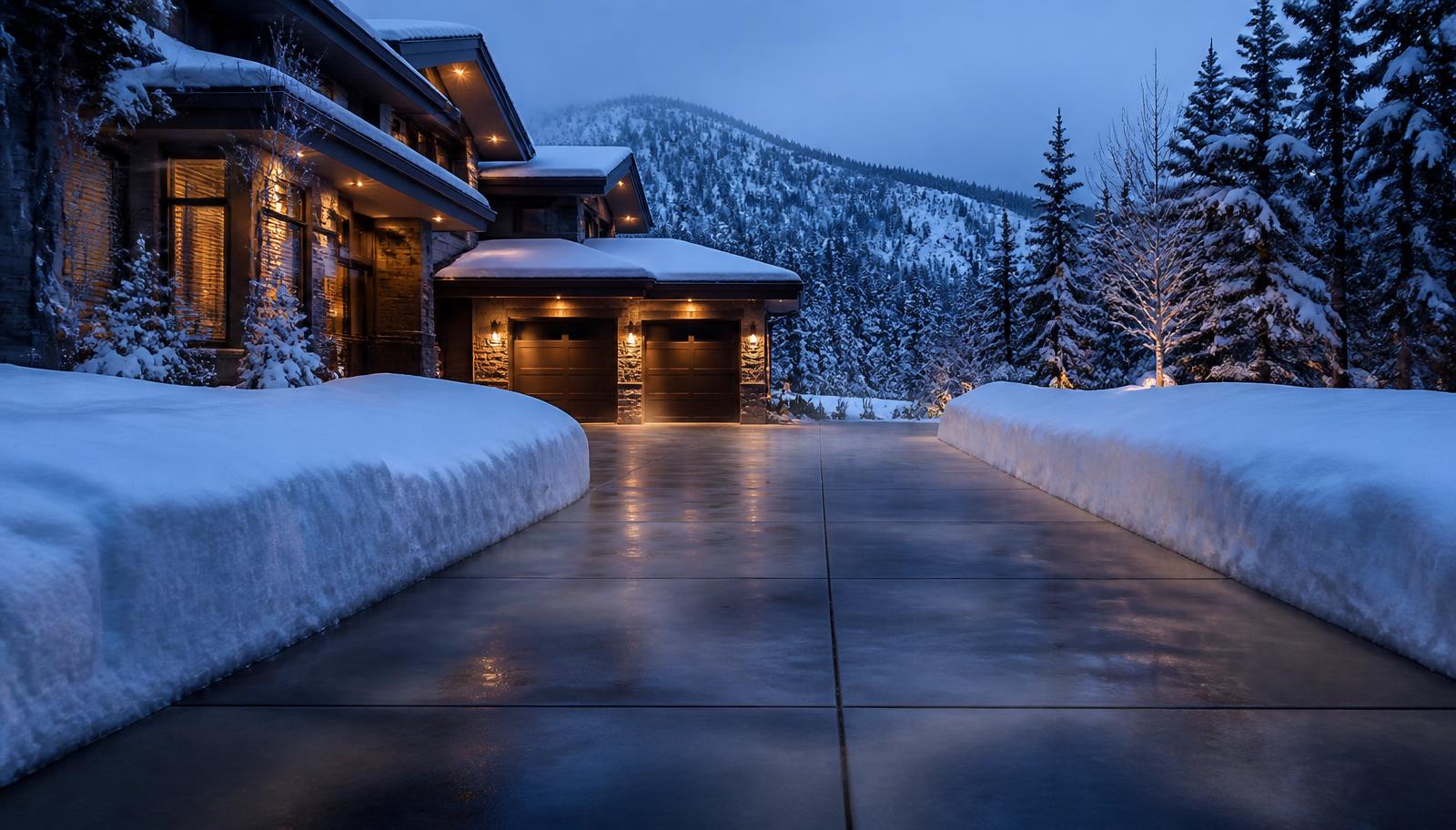
Snowmelt Driveways & Walkways
The storm ends and your driveway is already dry. No shovel, no plow, no salt.
How it works
Heat under the concrete
PEX tubing is laid on the rebar or mesh before the pour and tied back to a boiler and heat exchanger. A glycol mix circulates through the slab and keeps the surface above freezing, so snow melts as it lands and runs off to drain.
Systems run on a slab sensor or an aerial snow sensor, so the driveway fires up when precipitation starts and shuts down when the surface is dry — you can also override it from a wall control before a storm hits.
Typical applications
- Steep or shaded driveways that ice over and stay iced
- Front walks, porches, and stairs where slips are the real risk
- Garage aprons and parking pads
- Patios, pool decks, and courtyards
- Commercial entries, ramps, and loading areas
Why it pays for itself
No shoveling or plowing
Skip the snow service contract and the 5 a.m. shovel before work.
Safer entries
Ice on a steep driveway or a set of stairs is the most likely injury on your property.
Protects your concrete
No salt, no de-icer, no plow blade chewing the edges and spalling the surface.
Zoned coverage
Heat the tire tracks, the walk, and the apron — you don't have to melt every square foot.
Quiet and automatic
Sensors run it. You usually notice it only when the neighbors are shoveling.
Shares your boiler
In many homes the same mechanical room feeds both radiant floors and the snowmelt loop.
Timing matters
New pour vs. retrofit
Pouring new concrete
This is the moment. Tubing goes in with the rebar, gets pressure-tested, and the concrete crew pours right over it. The incremental cost is a fraction of doing it later, so it's worth installing the loops even if you postpone the boiler.
Existing driveway
Snowmelt can't be added under a slab that's staying put — it needs a replacement pour or an overlay. If your driveway is cracked or nearing the end of its life, tearing it out and pouring it heated is the right time to combine both projects.
Getting concrete poured this year?
Call before the forms go in. Adding snowmelt during a pour is inexpensive; adding it afterward means new concrete.